The Artistic Interpretation of the Heroic Figure in Ancient Eastern Epics such as “Gilgamesh” and the “Shahnameh”
DOI:
https://doi.org/10.5281/zenodo.23131236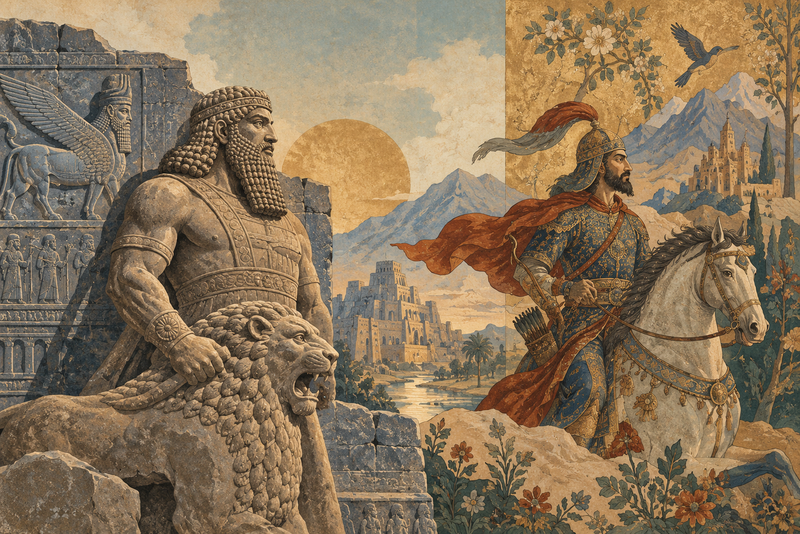
Abstract
This article examines the artistic interpretation of the heroic figure in Ancient Eastern epic tradition through a comparative typological study of the Epic of Gilgamesh and Ferdowsi’s Shahnameh. Attention is devoted to Gilgamesh and Rostam, focusing on their historical foundations, heroic qualities, physical power, moral responsibility, human limitations, and relationship with fate. Gilgamesh is interpreted through his friendship with Enkidu, the death of his companion, and the subsequent search for immortality, which transforms the hero from a powerful ruler into a reflective individual confronting mortality. As well as, Rostam is presented as a heroic defender of homeland and social order whose courage, loyalty, spiritual responsibility, and tragedy shape the character. Moreover, the comparison shows that both heroes embody cultural ideals of strength and protection, while performing different artistic functions within their epics. Additionally, the study argues that heroism is represented not only through power, but also through ethical choice, psychological development, suffering, responsibility, and tragedy.
Keywords:
Gilgamesh Bilgamesh Enkidu Rostam Shahnameh Sumer Akkadian epic hero heroic character mythology historical figure Eastern epicReferences
Abdurahmonov, A. (2006). Turkiy xalqlar og‘zaki ijodi. Samarqand.
Firdavsiy. (1975). Shohnoma. G‘afur G‘ulom nomidagi Adabiyot va san’at nashriyoti.
Published
Downloads
How to Cite
Issue
Section
License
Copyright (c) 2026 Bibijon Rustamovna Sapayeva

This work is licensed under a Creative Commons Attribution 4.0 International License.


 Republic of Uzbekistan, Tashkent city,
  +998 93 097 75 88