Why Does AI Understand Some People Better Than Others? A Linguistic Perspective on Human-AI Communication and the Changing Human Mind
DOI:
https://doi.org/10.5281/zenodo.23131315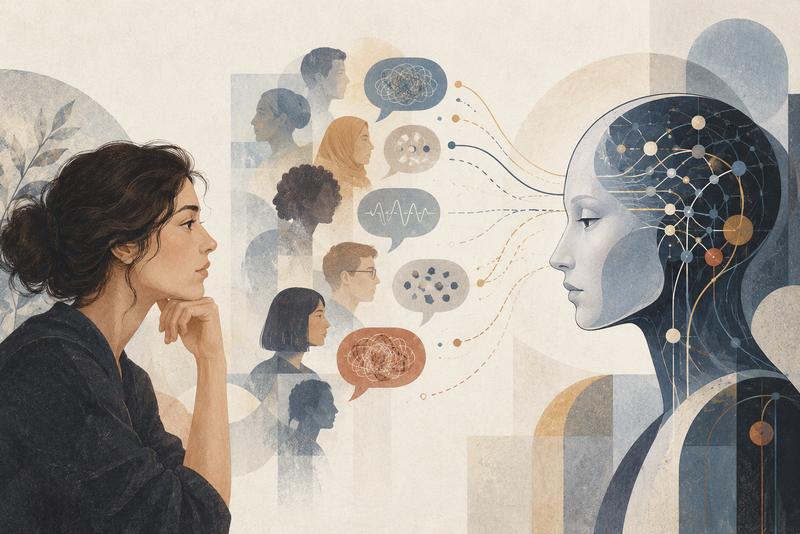
Abstract
This conceptual article examines a question that is important as generative artificial intelligence enters everyday communication: why does the same AI system appear to understand some people better than others? The article argues that AI performance in dialogue should not be viewed only as a property of the model itself. Human linguistic behavior, including vocabulary, discourse organization, explicitness, ambiguity, multilingualism, and communicative style, may also shape interaction outcomes. Drawing on recent research on linguistic convergence, personalization, human adaptation, and AI-assisted writing, the article proposes a two-way model of human-AI communication. In this model, people influence how AI interprets their messages, while repeated interaction with AI may gradually influence users’ language and cognitive strategies. Particular attention is given to multilingual speakers and the Uzbek-Russian-English context. The article does not claim that AI necessarily changes human thinking; instead, it proposes testable questions about linguistic adaptation, problem formulation, cognitive offloading, and transfer beyond AI-supported tasks. The proposed framework can guide future research.
Keywords:
Generative AI human-AI communication linguistics multilingualism language adaptation cognitionReferences
Bassignana, E., Cercas Curry, A., & Hovy, D. (2025). The AI gap: How socioeconomic status affects language technology interactions. Findings of the Association for Computational Linguistics: ACL 2025. https://aclanthology.org/2025.acl-long.914/
Baumler, C., Bao, C., Nghiem, H., Yang, X., Carpuat, M., & Daumé III, H. (2026). Can you make it sound like you? Post-editing LLM-generated text for personal style. Proceedings of the 64th Annual Meeting of the Association for Computational Linguistics. https://aclanthology.org/2026.acl-long.2030/
Blevins, T., Schmalwieser, S., & Roth, B. (2026). Do language models accommodate their users? A study of linguistic convergence. Proceedings of the 19th Conference of the European Chapter of the Association for Computational Linguistics. https://aclanthology.org/2026.eacl-long.34/
Durandard, N., Dhawan, S., & Poibeau, T. (2025). LLMs stick to the point, humans to style: Semantic and stylistic alignment in human and LLM communication. Proceedings of the 26th Annual Meeting of the Special Interest Group on Discourse and Dialogue, 206–213. https://aclanthology.org/2025.sigdial-1.16/
Kosmyna, N., Hauptmann, E., Yuan, Y. T., Situ, J., Liao, X.-H., Beresnitzky, A. V., Braunstein, I., & Maes, P. (2025). Your brain on ChatGPT: Accumulation of cognitive debt when using an AI assistant for essay writing task. arXiv. https://doi.org/10.48550/arXiv.2506.08872
Lee, H.-P., Sarkar, A., Tankelevitch, L., Drosos, I., Rintel, S., Banks, R., & Wilson, N. (2025). The impact of generative AI on critical thinking: Self-reported reductions in cognitive effort and confidence effects from a survey of knowledge workers. Proceedings of the 2025 CHI Conference on Human Factors in Computing Systems. https://doi.org/10.1145/3706598.3713778
Li, Y., Zhao, Z., & Scarton, C. (2025). It’s all about in-context learning! Teaching extremely low-resource languages to LLMs. Findings of the Association for Computational Linguistics: EMNLP 2025. https://aclanthology.org/2025.emnlp-main.1502/
Miletić, F., & Falk, N. (2026). What are LLMs doing to scientific communication? Measuring changes in writing practices and reading experience. Proceedings of the Fifteenth Language Resources and Evaluation Conference, 1811–1830. https://aclanthology.org/2026.lrec-1.142/
Sicilia, A., Gates, J., & Alikhani, M. (2024). HumBEL: A human-in-the-loop approach for evaluating demographic factors of language models in human-machine conversations. Proceedings of the 18th Conference of the European Chapter of the Association for Computational Linguistics, 1020–1034. https://aclanthology.org/2024.eacl-long.68/
Tanguy, C., Janssens, R., Belpaeme, T., & Dambre, J. (2025). Human alignment: How much do we adapt to LLMs? Proceedings of the 63rd Annual Meeting of the Association for Computational Linguistics (Volume 2: Short Papers), 603–613. https://aclanthology.org/2025.acl-short.47/
Wang, M., & Spitz, A. (2025). Quantifying the risks of LLM- and tool-assisted rephrasing to linguistic diversity. Findings of the Association for Computational Linguistics: EMNLP 2025, 22561–22574. https://aclanthology.org/2025.findings-emnlp.1228/
Published
Downloads
How to Cite
Issue
Section
License
Copyright (c) 2026 Shahnoza Nosirjon qizi Ibragimova

This work is licensed under a Creative Commons Attribution 4.0 International License.


 Republic of Uzbekistan, Tashkent city,
  +998 93 097 75 88