APPLYING THE PROBLEM-BASED LEARNING (PBL) APPROACH TO ASSIST LEARNERS IMPROVE COGNITIVE AND LINGUISTIC SKILLS
Abstract
This article examines the efficacy of Problem-Based Learning (PBL) as a pedagogical method for the concurrent development of cognitive and linguistic skills. Moving beyond traditional, siloed instruction, PBL uses real-world, ill-structured problems as a catalyst for learning, engaging students in a cycle of inquiry, collaboration, and reflection. The analysis demonstrates that this process inherently fosters higher-order cognitive abilities – including critical thinking, problem-solving, and metacognition – while providing authentic, integrated practice in reading, writing, speaking, and listening. The article highlights key benefits such as enhanced intrinsic motivation, deepened contextual learning, and the cultivation of learner autonomy. However, it also addresses significant implementation challenges, including the time-intensive nature of PBL, the complex shift in roles for teachers and students, potential trade-offs between fluency and accuracy, and difficulties in assessment. It is concluded that, despite these challenges, PBL offers a powerful, synergistic framework for preparing learners to be agile thinkers and effective communicators, capable of applying their skills to complex, real-world situations.
Keywords:
Problem-Based Learning (PBL) Cognitive Skills Linguistic Skills Critical Thinking Student-Centered Learning Authentic Assessment Educational Methodology.Introduction: Bridging the Gap Between Knowledge and Application
In an era defined by information abundance and complex global challenges, the ultimate goal of education is shifting. It is no longer sufficient for learners to simply accumulate facts, they must be able to apply knowledge deftly, think critically, and communicate effectively to solve novel problems. This is especially true in language education, where the traditional dichotomy between learning about a language and being able to use it fluently persists. The Problem-Based Learning (PBL) method emerges as a powerful pedagogical response to this challenge, offering a dynamic framework for the simultaneous development of cognitive and linguistic skills.
Originally pioneered in medical education during the 1960s, PBL is an instructional learner-centered approach that uses real-world problems as the catalyst for learning. As defined by Howard Barrows, a key architect of the method, PBL is "the learning that results from the process of working towards the understanding of, or resolution of, a problem" (Barrows, 1996, p. 5). This article will explore the mechanisms through which PBL facilitates the intertwined development of cognitive abilities – such as analysis, evaluation, and problem-solving – and linguistic competencies, including vocabulary acquisition, grammatical accuracy, and communicative fluency. By examining its benefits, addressing its inherent challenges, and considering its practical implementation, we can appreciate PBL's role in cultivating agile, competent thinkers and communicators.
The PBL Process: A Cycle of Inquiry and Collaboration
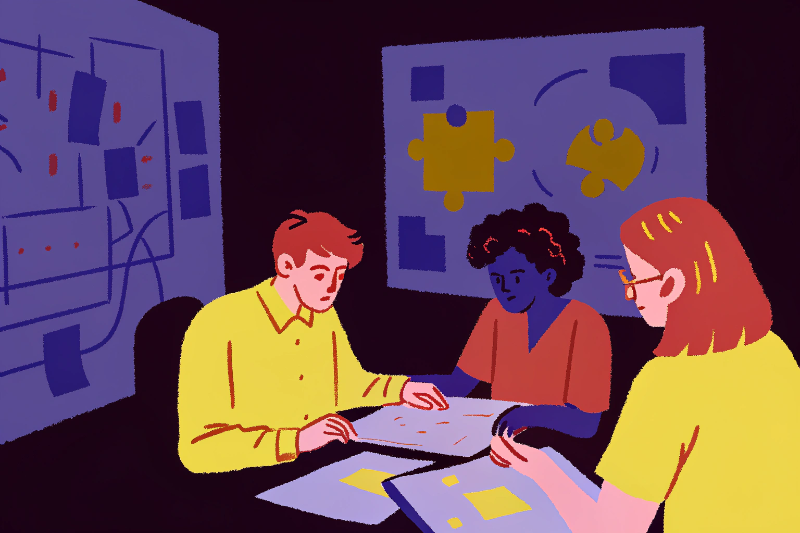
The power of PBL lies not in the problem itself, but in the structured process it initiates. A typical PBL cycle in an educational setting unfolds in several key stages:
- Problem Presentation:The learning journey begins with an "ill-structured" problem – one that is complex, open-ended, and mirrors real-world challenges. For example, students might be tasked with: "Design a sustainable business proposal for a local community," or "Develop a campaign to reduce plastic waste in our school."
- Identification of Prior Knowledge and Learning Needs:In small groups, students analyze the problem. They discuss what they already know that is relevant (activating prior knowledge) and, more importantly, identify the gaps in their understanding. This step forces metacognition – thinking about their own thinking – and generates a list of "learning issues" they need to research.
- Self-Directed Learning:This is the independent research phase. Students investigate their identified learning issues using various resources – texts, digital media, interviews – to gather the necessary information and conceptual knowledge.
- Collaborative Synthesis and Application:The group reconvenes to share their findings. They must critically evaluate the new information, debate its relevance, and synthesize it with their prior knowledge to develop a viable solution to the initial problem.
- Solution Presentation and Reflection:Groups present their conclusions, justifying their reasoning. The cycle culminates in a crucial reflection phase, where students evaluate the effectiveness of their solution, the collaborative process, and the knowledge and skills they have gained.
This iterative process ensures that cognitive engagement and linguistic practice are continuous and deeply contextualized.
Synergistic Benefits: How PBL Fosters Dual-Skill Development
- Intrinsic Motivation through Authentic Context
PBL replaces decontextualized exercises with meaningful, relevant problems. This authenticity transforms the learner's mindset. The driving force is no longer an external grade, but an internal "need to know" to solve the problem. As educational theorist John Dewey famously argued, "Education is not preparation for life, education is life itself." PBL embodies this principle, making the classroom a microcosm of real-life challenges. This heightened engagement leads to deeper processing of both the subject matter and the language required to navigate it.
- Integrated Cognitive and Linguistic Practice
Traditional instruction often silos skills. In contrast, PBL necessitates their seamless integration. To solve a problem, learners must:
- Readand comprehend complex source materials (reading comprehension).
- Discussand negotiate ideas with peers (speaking & listening).
- Synthesizeinformation into a coherent solution (critical thinking).
- Presenttheir findings in a clear, persuasive manner (writing & speaking).
This holistic engagement ensures that language is used as a tool for thinking and communication, not as an abstract subject. Vocabulary is acquired not from a list, but because it is essential to the task (e.g., learning terms like "carbon footprint" or "profit margin"). Grammatical structures are practiced because they are necessary for constructing a logical argument.
- Cultivation of Higher-Order Thinking Skills
PBL is inherently designed to push learners beyond simple recall. The ill-structured problem forces them to operate at the highest levels of Bloom's Taxonomy. They must analyze information from different sources, evaluate the credibility of evidence, synthesize disparate ideas, and create an original solution. One proponent notes, "PBL is about learning to think, and thinking to learn." This cognitive workout occurs entirely within the medium of the target language, forging a strong connection between complex thought and complex language use.
- Development of Metacognition and Learner Autonomy
The PBL cycle institutionalizes reflection. By constantly asking, "What do we know?" and "What do we need to find out?", students develop metacognitive awareness. They become managers of their own learning journey, developing the ability to set goals, locate resources, and assess their progress. This autonomy is a cornerstone of lifelong learning, equipping students with the strategies to continue developing their cognitive and linguistic skills long after they leave the classroom.
Challenges and Considerations in Implementation
- The Time-Intensive Nature of the Process
A single PBL cycle can span days or weeks. This often conflicts with rigid, content-heavy curricula and the pressure to "cover" a predetermined syllabus. Educators may struggle to balance the depth of learning PBL offers with the breadth of material required by standardized testing.
- The Shift in Roles for Teachers and Students
PBL demands a fundamental shift in the classroom dynamic. The teacher transitions from a "sage on the stage" to a "guide on the side" – a facilitator of learning rather than a dispenser of knowledge. This requires a different set of skills, including expert questioning, group process management, and the ability to provide just-in-time support. For students accustomed to passive learning, the sudden responsibility for their own learning can be disorienting and lead to initial resistance or anxiety.
- Balancing Fluency with Accuracy
A primary focus on problem-solving and communication can sometimes prioritize fluency at the expense of linguistic accuracy. In the flow of collaboration, students may develop and reinforce interlanguage errors. The facilitator must therefore be vigilant, finding discreet and effective ways to provide corrective feedback without stifling communicative confidence. This requires a delicate balance, integrating form-focused instruction within the problem-solving context.
- Assessment Complexities
Evaluating student performance in PBL is more nuanced than scoring a multiple-choice test. Assessment must be multi-faceted, capturing not only the final product but also the quality of the process – research, collaboration, individual contribution, and reflection. This typically requires detailed rubrics that transparently outline criteria for both cognitive skills (e.g., depth of analysis) and linguistic competencies (e.g., clarity of presentation).
- Navigating Group Dynamics
As a collaborative methodology, PBL's success is highly dependent on positive group dynamics. Issues such as social loafing ("free-riding"), dominant personalities, and interpersonal conflict can undermine the learning experience for all members. Proactive facilitation and clear guidelines for collaborative work are essential to ensure equitable participation.
Conclusion: A Powerful Tool for a Complex World
The Problem-Based Learning method represents a significant evolution in educational practice, aligning pedagogy with the complex demands of the 21st century. By situating learning within the context of authentic, meaningful problems, PBL creates an environment where cognitive and linguistic skills are not merely taught but are authentically practiced and honed. The method fosters motivated, autonomous learners who are equipped not just with knowledge, but with the ability to think critically, collaborate effectively, and communicate persuasively. While the challenges of implementation – regarding time, teacher training, and assessment – are real, they are not insurmountable. They call for a shift in institutional support and professional development. PBL may not be the sole method used in a classroom, but its principles can profoundly enrich a curriculum. As we prepare students for an unpredictable future, equipping them with the intertwined capacities for deep thought and effective communication is paramount. In the words of Albert Einstein, "The significant problems we face cannot be solved at the same level of thinking we were at when we created them." Problem-Based Learning offers a proven pathway to developing that new, more sophisticated level of thinking and speaking.
References
Barrows, H. S. (1996). Problem-based learning in medicine and beyond: A brief overview. New Directions for Teaching and Learning, *1996*(68), 3–12.
Dewey, J. (1938). Experience and education. Kappa Delta Pi.
Hmelo-Silver, C. E. (2004). Problem-based learning: What and how do students learn? Educational Psychology Review, *16*(3), 235–266.
Jonassen, D. H. (2011). Supporting problem solving in PBL. Interdisciplinary Journal of Problem-Based Learning, *5*(2), 95–119.
Savery, J. R. (2015). Overview of problem-based learning: Definitions and distinctions. In A. Walker, H. Leary, C. Hmelo-Silver, & P. A. Ertmer (Eds.), Essential readings in problem-based learning (pp. 5-15). Purdue University Press.
Savin-Baden, M. (2000). Problem-based learning in higher education: Untold stories. Open University Press.
Stoller, F. L., & Myers, C. C. (2020). Project-based learning: A five-stage framework to guide language teachers. In A. Gras-Velázquez (Ed.), Project-Based Learning in Second Language Acquisition: Building Communities of Practice in Higher Education (pp. 25-44). Routledge.
Published
Downloads
How to Cite
License
Copyright (c) 2025 Mansur Odiljonovich RAKHIMOV

This work is licensed under a Creative Commons Attribution 4.0 International License.


 Republic of Uzbekistan, Tashkent city,
  +998 93 097 75 88