HOW ANIMAL METAPHORS SHAPE HUMAN THOUGHT
Abstract
The article examines how animal metaphors structure human thinking, communication and cultural perception. Drawing on Conceptual Metaphor Theory (Lakoff & Johnson, 1980), it argues that animal-based figurative expressions are not merely stylistic ornaments but cognitive tools that map observable animal traits onto abstract human qualities and social relations. On the basis of examples from English, Malay, Russian and Uzbek, the study shows both cross-linguistic universals (e.g., LION as a symbol of bravery, FOX as a symbol of cunning) and culture-specific meanings (e.g., divergent evaluations of DOG or OWL). Special attention is given to the main functions of animal metaphors in discourse: characterization of personality, encoding of moral lessons in fables and proverbs, creation of humor and irony, and implicit social or political commentary. The article concludes that animal metaphors provide insight into shared cognitive patterns while simultaneously reflecting culturally grounded worldviews, thus demonstrating the close interconnection between language, thought and culture.
Keywords:
animal metaphors conceptual metaphor human cognition cross-cultural semantics figurative language English Malay Russian Uzbek.Introduction. “Every time we call someone ‘busy as a bee’ or ‘sly as a fox,’ we tap into a rich tradition of animal metaphors that shape how we think and speak.” Metaphors are more than just decorative language – they are fundamental to human cognition, helping us understand abstract ideas through familiar experiences. Among these, animal metaphors are particularly vivid and culturally rich. Animals have been central to human life, providing sustenance, companionship, and symbolic meaning. Linguistically, they serve as powerful tools to describe human traits, behaviors, and social phenomena. This article explores the role of animal metaphors in language, highlighting their cognitive, cultural, and communicative significance across different cultures.
Animal Metaphors in Human Cognition
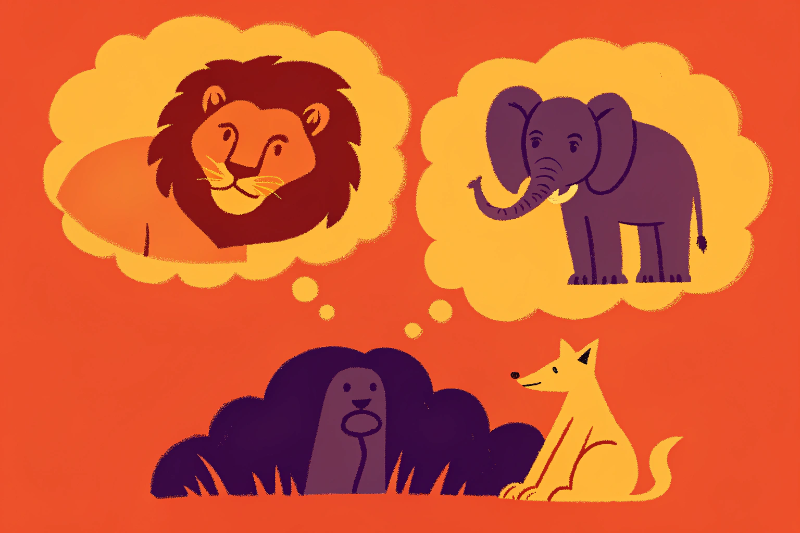
Cognitive linguists argue that metaphors reflect the way humans think, not just how they speak. According to the Conceptual Metaphor Theory proposed by Lakoff and Johnson (1980), people often understand abstract concepts through more tangible experiences. Animals, being part of everyday life and shared knowledge across cultures, become ideal vehicles for metaphorical thinking. For instance, describing a person as a “fox” evokes cleverness, while calling someone a “lion” implies bravery. These metaphors tap into universal perceptions of animal behavior and project them onto human experiences.
Cultural Variations in Animal Metaphors
Animal metaphors are not universal, they vary across languages and cultures. In English, a “dog” might symbolize loyalty, whereas in some cultures, dogs are associated with uncleanliness. Similarly, the owl is widely seen as wise in Western cultures, but in certain African or Asian traditions, it may symbolize death or misfortune. Studying animal metaphors in different languages reveals cultural values, social norms, and historical relationships with animals. Such metaphors also illustrate how language encodes human perception of the natural world.
Functions of Animal Metaphors in Language
Animal metaphors serve multiple linguistic and communicative purposes:
- Characterization: They provide vivid descriptions of personality traits (e.g., “sly as a fox,” “brave as a lion”).
- Moral Lessons: Fables and proverbs use animals to teach ethical or social lessons, such as “The Tortoise and the Hare,” illustrating perseverance versus arrogance.
- Humor and Irony: Metaphorical animal language often carries humor or irony, e.g., calling someone a “chicken” to denote cowardice.
- Social Commentary: Political discourse sometimes employs animal metaphors to critique behavior, such as referring to a manipulative leader as a “wolf in sheep’s clothing.”
Examples of Animal Metaphors Across Languages
|
Animal |
English |
Meaning |
Malay |
Meaning |
|
Fox |
Sly as a fox |
Clever, cunning |
Licik seperti musang |
Clever, tricky |
|
Lion |
Brave as a lion |
Courageous |
Berani seperti singa |
Brave, strong |
|
Owl |
Wise as an owl |
Intelligent, knowledgeable |
Bijak seperti burung hantu |
Wise |
|
Dog |
Loyal as a dog |
Loyal, faithful |
Setia seperti anjing |
Loyal |
|
Snake |
Snake in the grass |
Deceptive, treacherous |
Ular dalam rumput |
Deceptive |
|
Bear |
Bear hug |
Strong, protective |
Pelukan beruang |
Strong, protective |
|
Chicken |
Chicken |
Cowardly |
Penakut seperti ayam |
Coward |
|
Bee |
Busy bee |
Hardworking, diligent |
Sibuk seperti lebah |
Hardworking |
|
Russian |
Meaning |
Uzbek |
Meaning |
|
Хитрый как лиса |
Cunning, clever |
Tulki kabi shayton |
Cunning, clever |
|
Храбрый как лев |
Brave |
Sher kabi jasur |
Brave, strong |
|
Мудрый как сова |
Wise |
Buqo’ri kabi dono |
Wise |
|
Верный как собака |
Faithful |
It kabi sodiq |
Loyal |
|
Змея в траве |
Deceptive |
O’tloqdagi ilon |
Deceptive |
|
Медвежье объятие |
Protective |
Ayiq quchoqlash |
Strong, protective |
|
Трус как курица |
Coward |
Tovuq kabi qo’rqoq |
Cowardly |
|
Трудолюбивый как пчела |
Hardworking |
Asalarichalik mehnatkash |
Hardworking |
Cross-Cultural Similarities and Differences
Examining animal metaphors across languages reveals fascinating patterns of both universality and cultural specificity.
- Universal Traits:
- Lion: Across English, Malay, Russian, and Uzbek, lions symbolize bravery and strength, reflecting their shared perception as dominant predators.
- Fox: Foxes are consistently associated with cleverness or cunning, mirroring their behavior in nature.
- Cultural Specificity:
- Owl: While English, Malay, Russian, and Uzbek often view owls as wise, other cultures may associate them with misfortune or death.
- Dog: In English, dogs are primarily loyal, but in some cultures, dogs may carry negative connotations, demonstrating cultural influence on metaphorical meaning.
- Diverse Usage:
- Everyday expressions like “busy bee” or “chicken” often carry humorous or colloquial tones.
- In political or literary contexts, metaphors such as “snake in the grass” rely on shared cultural knowledge for critique or commentary.
This comparison shows that while human cognition often relies on observable animal traits, cultural factors shape how these traits are expressed linguistically.
Conclusion
Animal metaphors are a window into human cognition, culture, and communication. They transform familiar natural experiences into tools for understanding human behavior, abstract concepts, and social dynamics. By examining animal metaphors across languages, we gain insight into both universal human thought and culturally specific interpretations. These metaphors demonstrate that language is not merely a neutral tool for communication but a reflection of thought, culture, and imagination.
Summary
Animal metaphors are more than colorful expressions – they are a reflection of how humans think, communicate, and understand the world. From lions symbolizing bravery to foxes representing cunning, these metaphors reveal both universal human experiences and culturally unique perspectives. They enrich language by adding vivid imagery, humor, and moral lessons, while also offering insight into societal values. By paying attention to the animals in our words, we can better understand ourselves, our cultures, and the intricate ways language shapes thought.
References
Metaphors We Live By – George Lakoff & Mark Johnson. University of Chicago Press, 1980.
Women, Fire, and Dangerous Things: What Categories Reveal about the Mind – George Lakoff. University of Chicago Press, 1987.
Metaphor: A Practical Introduction – Zoltán Kövecses. Oxford University Press, 2002. (used often in conceptual metaphor research)
Resemblance operations and conceptual complexity in animal metaphors – Aneider Iza Ervitia (2012). Revista de Lingüística y Lenguas Aplicadas.
Animal Metaphors and Metaphorizing Animals: An Integrated Literary, Cognitive, and Evolutionary Analysis of Making and Partaking of Stories – (2011). In Evolution: Education and Outreach.
The Conceptual Metaphor PARENTS ARE ANIMALS: On Linguistic Terms Used Figuratively for Types of Parenting – Agnieszka Grząśko & Robert Kiełtyka (2024). Atlantis Journal.
A Comparison of HUMANS ARE ANIMALS Conceptual Metaphor between English and Thai – Chatchawadee Saralamba (2021). Language and Linguistics, 39(1).
Metaphors in lexicon: Animal attributes as idioms in Japanese – M. H. D. Sudipa, N. L. Sutjiati Beratha, I. M. Rajeg & M. R. D. Aryani (2025). International Journal of Linguistics, Literature and Culture, 11(4).
ANIMALISTIC METAPHORS AND SIMILES OF THE ENGLISH LANGUAUE BASED ON THE IMAGE OF DOMESTIC ANIMALS – Y. V. Gorshunov & E. Y. Gorshunova (2021). Austrian Journal of Humanities and Social Sciences.
Published
Downloads
How to Cite
License
Copyright (c) 2025 Azimjon YULDASHEV

This work is licensed under a Creative Commons Attribution 4.0 International License.


 Republic of Uzbekistan, Tashkent city,
  +998 93 097 75 88