SEMANTIC AND PRAGMATIC FUNCTIONS OF PHRASEOLOGICAL UNITS RELATED TO THE FACE AND FACIAL EXPRESSIONS
Abstract
Phraseological units connected to the face and facial expressions form one of the most expressive layers of language, carrying both semantic density and pragmatic nuance. This article examines how such units operate as compact cultural codes, conveying emotions, attitudes, and evaluative meanings that often exceed their literal wording. Drawing from English and Uzbek examples, the study explores how idioms like “keep a straight face,” “face the music,” “cheeky,” or “ko‘ngli yorishmoq,” “yuz-ko‘z qilmoq” unpack complex interpersonal meanings through metaphorical extension and embodied cognition. The analysis highlights how face-related phraseologisms not only describe emotional states but also regulate social interaction, reinforce politeness strategies, signal power dynamics, and position speakers within cultural value systems. The findings show that these units function as pragmatic accelerators – tiny linguistic devices that deliver high-impact meaning with minimal verbal effort. The research ultimately argues that phraseological units tied to the face serve as cognitive shortcuts that reveal how a culture conceptualizes emotion, dignity, shame, respect, intimacy, and social alignment.
Keywords:
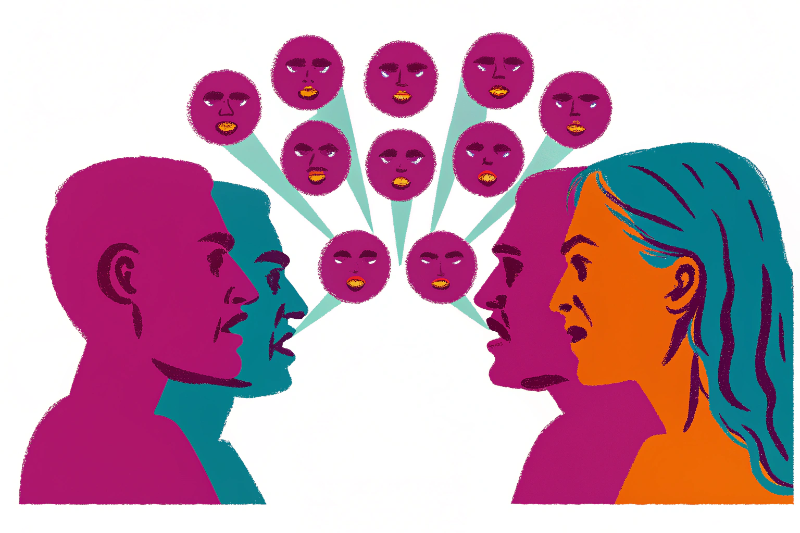
phraseological units facial expressions semantics pragmatics metaphor emotional meaning evaluative meaning sociocultural context idiomatic expressionsIntroduction. Language is basically humanity’s ultimate cheat code – a system where a few words can carry whole universes of meaning. And nowhere is this more obvious than in phraseological units built around the face. The face is our primary emotional billboard, our social business card, and the OG communication tool long before we had Wi-Fi or emojis. Naturally, languages have crafted dozens of idioms, expressions, and stable combinations where the face becomes a linguistic stage for emotions, social rituals, and cultural values.
These idioms are more than stylistic decorations. They are semantic containers packed with cultural memory: respect, shame, bravery, deceit, tenderness – all encoded in a short phrase like “lose face,” “two-faced,” “face value,” “yuzini yorug‘ qilmoq,” or “ko‘z oldida qora tushmoq.” They show us not only how a language names emotions but how a community interprets them. From a semantic perspective, face-related phraseological units undergo metaphorization, metonymy, generalization, and evaluative transformation. A “hard face” is not a physical object but a symbolic representation of emotional rigidity. A person who “shows their true colors” isn’t literally changing pigment – they’re revealing identity. Semantics gives us the building blocks, the literal-plus-figurative meaning that makes these units vivid and memorable.
But the real magic is in their pragmatic functions. These expressions help speakers soften criticism, intensify praise, hide sarcasm, or position themselves politely in conversation. They support face-saving strategies, reinforce social harmony, and subtly mark emotional distance or intimacy. In many cultures, talking about the face is actually talking about dignity, honor, and self-worth – making idioms a reflection of deeper sociocultural patterns. This article investigates how phraseological units related to the face and facial expressions operate across both semantic structure and pragmatic performance. By examining their literal origins, metaphorical extensions, and communicative effects, the study aims to show how these expressions reveal the intertwined nature of language, culture, emotion, and social interaction. Ultimately, the research highlights that such phraseologisms are not simply idioms – they are miniature cultural scripts that map how people understand themselves and each other.
Literature Review. Research on phraseological units has long emphasized their multifunctional nature in linguistic systems, with scholars agreeing that idioms are not mere linguistic ornaments but stable, culturally embedded meaning structures. Foundational works by A. V. Kunin, N. N. Amosova, and Charles Fillmore highlight that phraseological units operate on the intersection of semantics, cognition, and cultural experience. Kunin’s theory positions idioms as fixed lexical combinations whose figurative meaning often surpasses their literal components, while Amosova focuses on the contextual dependency and semantic fusion that shape phraseological meaning. Building on this, Fillmore’s frame semantics demonstrates that idiomatic expressions reflect culturally shared scenes and cognitive frames – an idea that becomes especially relevant in face-related expressions grounded in embodied experience.
Scholars such as Lakoff and Johnson argue that idioms are built upon conceptual metaphors, many of which stem from the human body and facial expressions. Metaphors like FACE AS DIGNITY, EYES AS PERCEPTION, or SMILE AS EMOTION are shared across many languages, revealing deep cross-cultural cognitive patterns. In Uzbek, for instance, phraseological units like “yuziga oyoq qo‘ymoq” or “ko‘zlari kulmoq” reflect cultural models of respect, honor, and emotional transparency. Similarly, English idioms such as “lose face,” “put on a brave face,” and “eyeball someone” encode evaluative judgments and interpersonal stances. These parallels support the idea that the face is a universal cognitive anchor for social meaning. Pragmatics-focused research, including Brown and Levinson’s politeness theory, shows that idioms related to the face often function as face-saving or face-threatening acts. Expressions describing shame, respect, sincerity, or deception tend to resonate directly with sociocultural expectations. Studies by Fraser, Wierzbicka, and Meier further emphasize how idioms shape interpersonal alignment: they can signal empathy, soften commands, amplify irony, or embed moral evaluations. Scholars working on Turkic and Uzbek phraseology – including M. Mirtojiev, A. Madvaliyev, and G. R. Rahmatullayeva – also demonstrate that face-related idioms often express ethical norms and community-based values, functioning as micro-narratives of cultural identity.
More recent studies within cognitive-pragmatic frameworks view phraseological units as multimodal signs: not just words, but miniature social scripts linked to perception, embodiment, and shared cultural memory. Research on emotional linguistics (e.g., Kövecses) and intercultural pragmatics confirms that idioms involving facial expressions are among the most expressive linguistic tools for encoding emotional states, evaluating behavior, and shaping social dynamics. Taken together, the literature underscores that phraseological units related to the face are semantically layered, culturally patterned, and pragmatically powerful mechanisms of meaning-making.
Methodology. The study adopts a qualitative, descriptive, and comparative approach grounded in semantic and pragmatic analysis. The primary data consists of English and Uzbek phraseological units related to the face and facial expressions, collected from explanatory dictionaries, bilingual phraseological dictionaries, academic corpora, and examples documented in existing linguistic research. Each unit is analyzed in terms of its literal image, figurative extension, semantic structure, and communicative function. The methodology is guided by three analytical lenses. First, a semantic analysis identifies metaphorical models, metonymic relations, evaluative components, and semantic shifts within each unit. This involves interpreting how lexical components tied to facial features – eyes, eyebrows, cheeks, mouth, face – undergo figurative transformation to express emotional or social meanings. Second, a pragmatic analysis explores how these units function within communicative contexts, drawing on speech act theory, politeness theory, and context-based meaning interpretation. This includes examining how idioms mitigate face-threatening acts, reinforce solidarity, express judgment, or articulate interpersonal relationships. The third component uses a comparative cross-linguistic approach, aligning English and Uzbek phraseological units to reveal similarities and divergences in metaphorical patterns and cultural conceptualizations. Examples are interpreted through the lens of cultural linguistics, identifying how each language encodes values such as dignity, respect, sincerity, shame, and emotional expression. The analysis does not rely on quantitative frequency but instead prioritizes depth, contextual interpretation, and cultural nuance. Through this integrative methodology, the study aims to uncover both the linguistic universality and cultural specificity of face-related phraseologisms, demonstrating how they serve as compact yet potent carriers of semantic richness and pragmatic force.
Results. The analysis of English and Uzbek phraseological units related to the face and facial expressions reveals several key semantic and pragmatic patterns that cut across both languages while also highlighting unique cultural nuances. First, the semantic structure of these units consistently demonstrates a heavy reliance on metaphor and metonymy rooted in embodied cognition. Facial components become symbolic anchors for a wide range of human emotions and interpersonal dynamics. In both languages, the eyes function as symbols of perception and sincerity (“ko‘z-ko‘z qilmoq,” “darting eyes,” “ko‘zlari porlamoq”), while the face operates as a metaphor for dignity, reputation, or emotional masking (“lose face,” “yuzini yorug‘ qilmoq,” “put on a brave face”). This indicates that the human face serves as a shared conceptual map for emotional and social meaning.
A second major finding is the evaluative nature of these phraseological units. Many expressions communicate praise, criticism, irony, or moral judgment without direct confrontation. Uzbek idioms such as “yuziga oyoq qo‘ymoq” or “ko‘zlari kulmoq” embed culturally charged evaluations related to respect, emotional openness, or behavioral norms. Similarly, English expressions like “two-faced,” “save face,” or “keep a straight face” encode social expectations surrounding honesty, self-control, and emotional performance. This evaluative layer allows speakers to express strong opinions indirectly, maintaining politeness or social harmony while still conveying a clear stance.
The pragmatic findings show that face-related phraseological units function as strategic communicative tools. They often perform identity-marking functions, signaling solidarity, emotional closeness, or social distance. They also serve as mitigators in potentially face-threatening situations, softening criticism or intensifying praise. In both languages, idioms tied to facial expressions frequently carry implicit social scripts – instructions for how one should act, react, or judge within a given cultural framework. This demonstrates that the pragmatic force of these units is not arbitrary but socially choreographed. The comparative results indicate both universality and cultural specificity. On the universal side, both languages use facial metaphors to conceptualize emotions, reputation, and interpersonal relations. On the culture-specific side, Uzbek phraseology displays a stronger emphasis on honor, respect, and collectivist values, whereas English idioms more frequently highlight individual psychological states, self-expression, and personal agency. These contrasts underscore the role of cultural logic in shaping how phraseological units are formed, understood, and deployed.
Collectively, the results position face-related idioms as miniature cultural artifacts: compact linguistic forms that mirror how communities perceive emotional expression, moral behavior, and social interaction.
Conclusion.The study demonstrates that phraseological units related to the face and facial expressions hold significant semantic and pragmatic weight, functioning far beyond their surface structure. They serve as linguistic shortcuts that help speakers navigate emotional realities, manage interpersonal relationships, and express culturally shaped attitudes. Their semantic richness stems from deep-rooted metaphors grounded in the human body, while their pragmatic power lies in their ability to encode evaluation, politeness, identity, and social coordination.
The findings reveal a shared cognitive foundation between English and Uzbek: both languages use the face as a central conceptual domain for mapping emotion, dignity, and human behavior. At the same time, cultural distinctions become visible in the subtle differences of metaphor, nuance, and communicative purpose. Uzbek phraseology foregrounds respect, honor, and communal values, while English idioms often highlight personal autonomy, emotional self-regulation, and psychological states.
Ultimately, the research underscores that face-related phraseological units act as windows into cultural worldview. They enrich communication with expressive depth, shape interpersonal expectations, and reflect the moral and emotional textures of a community. Understanding their semantic and pragmatic dimensions not only enhances linguistic awareness but also contributes to more culturally informed translation, language teaching, and cross-cultural communication. These idioms, compact yet potent, remind us that the human face is not just a biological feature – it is a living symbol through which languages narrate the story of human connection.
References
Amosova, N. N. (1963). Osnovy angliyskoy frazeologii. Leningrad: Leningrad University Press.
Brown, P., & Levinson, S. C. (1987). Politeness: Some universals in language usage. Cambridge: Cambridge University Press.
Fillmore, C. J. (1982). Frame semantics. In Linguistics in the Morning Calm (pp. 111–137). Seoul: Hanshin.
Fraser, B. (1990). Perspectives on politeness. Journal of Pragmatics, 14(2), 219–236.
Kövecses, Z. (2010). Metaphor: A practical introduction (2nd ed.). Oxford: Oxford University Press.
Kunin, A. V. (1996). Kurs frazeologii sovremennogo angliyskogo yazyka. Moscow: Vysshaya Shkola.
Lakoff, G., & Johnson, M. (1980). Metaphors We Live By. Chicago: University of Chicago Press.
Madvaliyev, A. (2010). O‘zbek tilining izohli frazeologik lug‘ati. Tashkent: Fan.
Meier, A. J. (1997). Teaching the universals of politeness. ELT Journal, 51(1), 21–28.
Mirtojiev, M. (2008). O‘zbek tilida frazeologiya va semantika. Tashkent: Fan.
Rahmatullayeva, G. R. (2014). O‘zbek frazeologiyasining lingvokulturologik xususiyatlari. Tashkent: Fan.
Wierzbicka, A. (1991). Cross-cultural pragmatics: The semantics of human interaction. Berlin: Mouton de Gruyter.
Published
Downloads
How to Cite
License
Copyright (c) 2025 Nafruza Esanboyevna AZIZOVA

This work is licensed under a Creative Commons Attribution 4.0 International License.


 Republic of Uzbekistan, Tashkent city,
  +998 93 097 75 88