INTEGRATING ARTIFICIAL INTELLIGENCE INTO METACOGNITIVE LEARNING STRATEGIES IN FOREIGN LANGUAGE EDUCATION
Abstract
Learning foreign languages (FL) is an integral part of the educational process in Uzbekistan, and almost all universities accept students with their language certificates nowadays, such as CEFR or IELTS. Therefore, demand for learning English has increased more than ever before. This research studies one significant factor in a global transformative period shaped by artificial intelligence (AI), which is integrating the use of metacognitive strategies with AI in studying FL.
An observational and comparative study was conducted to explore the effects of AI integration on metacognitive learning in FL. The study compares the effectiveness of using AI tools for teachers and learners, showing that the advantages are greater for students, as those with metacognitive skills can greatly benefit from using AI tools for self-progress even without teacher assistance. Learners develop stronger language skills when they combine metacognitive strategies with AI-supported learning. My long-term teaching and observations show that students who use metacognitive control and integrate AI tools into their thinking achieve their goals more efficiently than those who use AI without such strategies.
The research concludes the subject matter by showing the immense benefits and improvements gained by both parties of the educational process when integrating AI into the metacognitive process.
Learning English and other FL has become increasingly important in all stages of education in Uzbekistan. Particularly in higher education, students submit different language test results, such as TOEFL, IELTS, CEFR, and others to start their degrees. Such circumstances when there is a demand for languages always require the use of effective, innovative, and pioneering techniques and methods from language teachers. The aim of the paper is to show that the appearance of AI has created new opportunities to enhance language learning, and that integrating these tools into TFL is increasingly necessary. The study employs a comparative approach, examining the integration of AI with metacognitive strategies from my dual perspective as a learner and a teacher of FL.
It explores the ways of integrating metacognitive strategies with AI in the FL learning process. It shows the impact of successful integration of AI and metacognition on both learners and teachers. The novelty of this study is in its comparative approach to how metacognitive learning strategies work on their own and when they are integrated with AI tools. It should be mentioned that the inclusion of first-hand data from a foreign learner in this context adds an empirical dimension that enriches the theoretical side of using the integration mentioned in the language teaching process.
This literature review examines prior studies on metacognitive learning strategies and use of AI tools in teaching, identifying opportunities for further research. Metacognition, defined as “awareness and control of one’s own thinking, has been widely recognized as a key factor in successful language learning” (Flavell, 1979, Abdullayeva, 2024). Using metacognition with students is to empower them to think, act, and communicate so that students “can grow into “experts” who ask appropriate questions in context” (Reis, 2025). Research indicates that learners who actively monitor their comprehension and employ strategic planning tend to achieve higher proficiency. Similarly, “AI-based tools have been shown to enhance learning by providing personalized feedback, adaptive exercises, and opportunities for independent practice” (Woo, & Choi, 2021). Previous studies show that metacognitive strategies enhance language learning and AI tools can provide adaptive and personalized opportunities to learners and teachers. However, few studies have examined the intersection of AI and metacognitive learning strategies, highlighting the need for research in this area.
In learning FL and in teaching foreign languages (TFL) strategy such as metacognition is regularly used. Metacognitive learning involves questioning, planning, monitoring, and evaluating stages in the language learning process, so the learner applies it to improve language proficiency. Student has greater independence, critical reflection, and self-regulation while he or she uses metacognitive strategies in studying languages. Undoubtedly, “metacognition is a great thinking skill and habit of mind and behaviour” (Reis, 2025) and teachers are recommended to employ this strategy to create mutually beneficial condition. General formula to achieve this goal in TFL is running lessons with metacognitive elements. For teachers, understanding students’ metacognitive strategies allows for more targeted instruction and formative feedback. Therefore, creating more situations for students to use metacognitive strategies and instruct them as a teacher of FL to use correct steps of metacognition, observe and direct them into usage of such strategies help the teacher in creating effective methods, useful lesson materials and achieving needed results with the learning of students.
For instance, in my own experience, when I started learning English and Hindi (the learning processes happened simultaneously) my biggest problem at the beginning was that my strategy was largely task-focused and passive, I completed assignments but rarely engaged in reflective questioning. Over time, I began to notice patterns in pronunciation and meaning that were not explicitly explained by the teacher. This observation prompted me to ask questions such as “Why is this the case?” and to explore answers independently. Through this process, I gradually refined the quality of my inquiries, distinguishing between superficial and productive questions. This reflective practice enhanced my understanding of the languages and accelerated my learning relative to peers.
Upon later reflection, I recognized that the strategy I had employed aligned with metacognitive learning principles, “involving active monitoring, evaluation, and planning of cognitive processes” (Flavell, 1979). This insight now informs my teaching practice: I encourage students to ask questions, investigate patterns, compare current work with previous outputs, and periodically evaluate their progress. By fostering a metacognitive approach, students are guided toward deeper understanding, greater autonomy, and more effective learning outcomes.
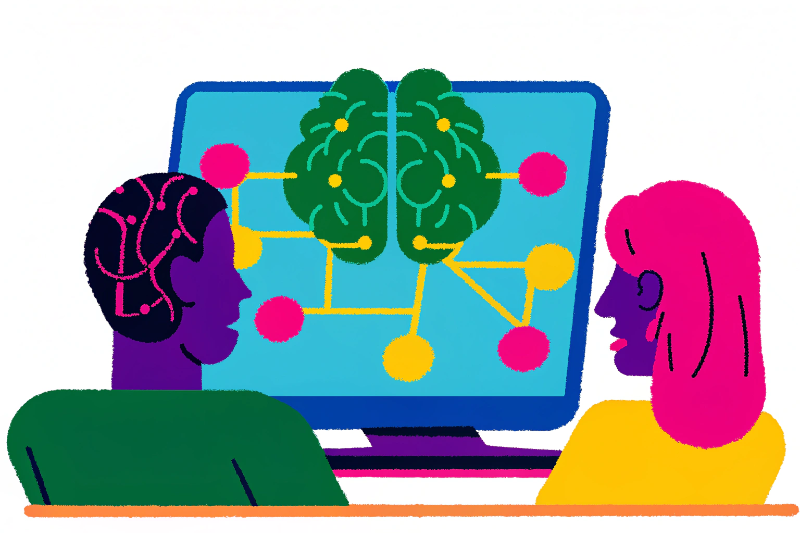
While metacognition in learning FL is effective on its own, integration of metacognitive strategies with AI tools can further enhance language learning. AI can provide adaptive exercises, immediate feedback, and personalized learning paths, supporting learners in planning, monitoring, and evaluating their progress more efficiently.
In the epoch of digital revolution and the appearance of AI with plenty of opportunities those who will use them wisely and with cognition may achieve great results. It is so important for learning FL and TFL that the integration mentioned in this study is one of the stepstones for beneficial results for the teacher and the student. “The essential micro-element of pedagogical activity consists of non-standard solutions” (Xoliqov, 2011, p.79.), and in the context of extensive use of AI, one of such non-standard solutions of a foreign-language teacher is to teach learners how to apply metacognition and integrate AI into this process. AI tools can enhance metacognitive learning by providing real-time feedback, adaptive exercises, and progress monitoring. When learners use AI purposefully – reflecting on their performance and adjusting strategies – they gain a greater understanding of their learning processes. This integration allows for more effective self-directed learning and supports teachers in guiding students more efficiently.
For instance, rather than simply asking an AI to generate sentences, students can first write their own sentences independently and then use AI to check grammar, punctuation, and word choice. Following this initial feedback, learners can apply metacognitive strategies by asking additional questions, such as: “Are there alternative wordings or synonyms? Could the sentence be paraphrased more naturally? What stylistic or contextual nuances could improve it?”. This process encourages active reflection, self-evaluation, and deeper engagement with the language. Teachers who systematically implement this approach – encouraging students to integrate metacognition with AI – create a classroom environment where learners develop both autonomy and critical thinking.
Additional examples include using AI-driven vocabulary quizzes to identify weak areas, prompting students to reflect on why certain mistakes occur, and having students compare revised sentences with their original versions to monitor improvement. AI can also provide adaptive exercises that challenge students to apply grammar rules in new contexts, while students use metacognitive monitoring to evaluate their performance and adjust strategies accordingly. Through these techniques, learners not only receive corrective feedback but also develop higher-order thinking skills, resulting in faster, more durable language acquisition.
In TFL, teachers can also gain significant benefits by using similar approach in preparing their lesson materials. Involving AI tools will help them to save time and create effective and meaningful lessons. In my own experience, I shared my students’ essays with AI and whenever I asked AI to generate grammar tasks or vocabulary exercises based on those material, it could easily identify common issues in the group’s work and highlight weaknesses. Sometimes, I was amazed at how I had overlooked these insights myself. This shows that integrating AI into lesson preparation not only supports students learning but also enhances teacher efficiency.
In conclusion, this is the time when educators should make decisions and find effective ways of incorporating technological and informative innovations into the process of TFL so that their students could benefit from such integration. For those with strong metacognitive abilities, teachers and their assistance do not make much difference because they are already independent learners. Therefore, facilitating metacognition as early as possible by using different techniques is the important stage and the following stage should be the integration of AI tools in this process to achieve self-directed learning. Overall, the study found that although students actively use AI in their education, the absence of necessary techniques – specifically a metacognitive approach – often leads them to rely on AI to complete tasks directly for them, without gaining real progress or developing further skills. It is recommended that educational institutions provide systematic training for both teachers and learners of FL on how to meaningfully combine metacognitive strategies with AI tools to maximize learning outcomes.
This study is limited by the absence of experimental data, as it relies on observational and comparative analysis. To measure its effectiveness, future research could involve empirical testing of the integration of AI into metacognitive strategies in FL learning at universities in Uzbekistan.
References
Abdullayeva, C. F. (2024). Cognitive factors in language learning. Ilmiy Tadqiqotlar va Ularning Yechimlari.
https://worldlyjournals.com/index.php/ituy/article/download/6933/11070/20683
Flavell, J. H. (1979). Metacognition and cognitive monitoring: A new area of cognitive developmental inquiry. American Psychologist, 34(10), 906–911.
Reis, C. (2025, January 9). What is metacognition? Get students thinking about their thinking. Times Higher Education.
Woo, L. J., & Choi, H. H. (2021). Systematic review for AI-based language learning tools. Journal of Digital Contents Society, 22(11), 1783–1792. https://doi.org/10.9728/dcs.2021.22.11.1783
Xoliqov, A. (2011). Pedagogik mahorat [Pedagogical Mastery]. Toshkent: Iqtisod-Moliya.
Published
Downloads
How to Cite
License
Copyright (c) 2025 Nodira Obiddinovna AGZAMOVA

This work is licensed under a Creative Commons Attribution 4.0 International License.


 Republic of Uzbekistan, Tashkent city,
  +998 93 097 75 88