TYPES OF GAMES USED IN THE TEACHING PROCESS FOR YEAR 5 AND 6 PUPILS IN ENGLISH LESSONS AND THE CRITERIA FOR THEIR SELECTION
Abstract
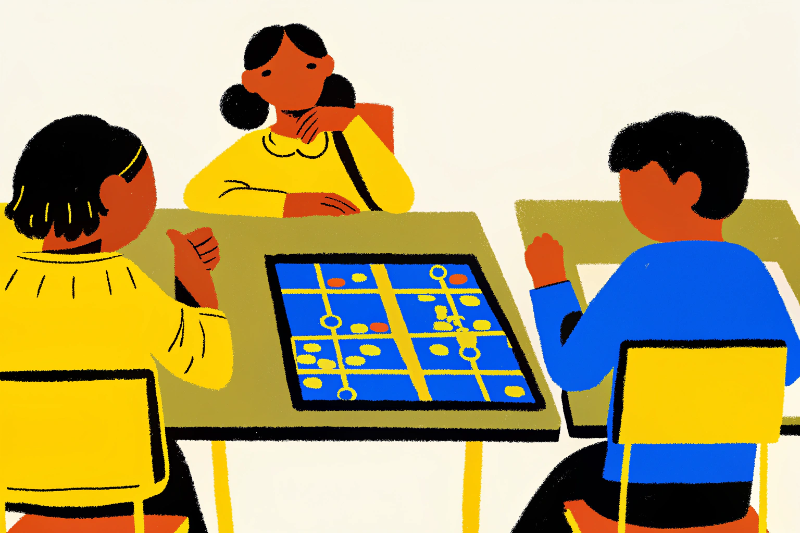
This article examines the types of games used in teaching English to Year 5 and 6 pupils and identifies the pedagogical and psychological criteria for their effective selection. Game-based learning is recognized as a method that increases students’ cognitive motivation, enhances problem-solving abilities, and strengthens communicative competence. The study highlights linguistic, communicative, didactic, and creative games as key categories in English language teaching and discusses how each type contributes to the development of pupils’ language skills. The article also presents scientific recommendations for designing and implementing educational games, emphasizing their role in fostering active learning, creativity, and meaningful communication.
Keywords:
game-based learning communicative competence English teaching Year 5 and 6 pupils creative games linguistic games didactic games selection criteria.In the modern education system, game technologies are recognized as one of the effective methods that activate students' cognitive activity, encourage independent thinking, and develop their communicative competence. Play is not merely entertainment but a didactic process that develops the learner's activity, thinking, communication and creative potential. Playful activities allow the teaching process to be organized in a natural, fun and creative environment. In particular, the role of game technologies in the teaching of English is invaluable, as they engage students in active conversation, increase the effectiveness of the lesson, and strengthen intrinsic motivation for language learning.
Game-based learning is a method of acquiring new knowledge and skills through digital and traditional games. The use of games in the educational process can significantly improve learning outcomes and the effectiveness of education. As German researcher Bökter notes, a game-based approach to learning supports the educational process in two ways: firstly, games encourage students to integrate knowledge from different subjects and apply it in the decision-making process, secondly, students have the opportunity to see how the outcome of the game changes as a result of the decisions they make. In addition, games promote communication between students by allowing them to discuss their actions in the game, which in turn develops cooperation and social skills.
Problem-solving skills are one of the key factors necessary for adapting to society. In this respect, game-based learning has been recognized as one of the most effective methods for developing such skills. For example, according to research conducted by the English educator Han, teaching through interactive activities deepens students' knowledge and develops their cognitive abilities in problem-solving. Game-based learning enhances students' engagement in lessons by integrating multiple competencies into the teaching process simultaneously.
Furthermore, it has been found that pupils participating in game-based learning achieve higher results in various academic subjects, including English language acquisition, compared to those who do not take part in such games (Boctor, 2013). Therefore, integrating a game-based approach into the educational process is an effective means of aligning the interests of teachers and students. Overall, game-based learning serves to develop students' active engagement, coordination skills, and creativity.
Game-based learning aims to balance theoretical content with learning through play during the teaching process. This approach engages students in a deep learning environment and directs them towards the intended learning outcomes. (Chen 2018). In particular, game-based teaching is considered highly effective in the process of teaching English (Mozelius & Hettiarachchi, 2017). Games should be designed so that students do not grow bored of repeating the game cycles. A good educational game must foster positive behaviours in students through repetition. This is achieved through the emotional and cognitive responses generated during the game (Boctor, 2013). It is recommended to include stages of discussion and result analysis between games (Mozelius & Hettiarachchi, 2017). The post-game discussion allows the teacher to connect the game's content with real life. This establishes a logical link between in-game scenarios and real-life experiences, aligning students' knowledge with the real world. Game-based learning programs should teach students to actively participate in their own learning process, to analyze and understand the knowledge they have acquired, and to apply it in real life (Boctor, 2013). In this process, the ‘adventure game’ approach proves effective. Such games purposefully combine education and entertainment (‘edutainment’) and are often based on complex, logical problems. (Bundick et al., 2014). For example, in adventure games, a player cannot continue the game without solving the problem they face. Therefore, the player is active in decision-making, and these decisions directly affect the gameplay. Through such games, students have the opportunity to try out various solutions, which enhances their overall problem-solving ability (Boctor, 2013).
Play has been studied theoretically by numerous educators and psychologists. For example, J. Huizinga interpreted play as a natural form of human activity, while D. B. Elkonin recognized play activity as an important factor in personal development. They emphasize that play develops pupils' skills in adopting social roles, engaging in communication, solving problematic situations and expressing their thoughts. In English language teaching, game technology enables these processes to be carried out in a natural environment.
Games vary in content and purpose. Linguistic games are primarily focused on acquiring phonetics, grammar, and vocabulary. For example, games such as ‘Word Bingo’, ‘Find Someone Who’ and ‘Matching Words’ serve as effective tools for expanding vocabulary and reinforcing pronunciation. Communicative games, on the other hand, prepare students for real-life communication situations. Through games such as ‘Role Play’, ‘Describe and Draw’, and ‘Information Gap’, students learn to express their thoughts freely, ask and answer questions, and take initiative in communication.
Didactic games play an important role in consolidating and reviewing topics covered, as well as in assessing knowledge. Such games foster a spirit of competition among students, whilst also encouraging the practical application of knowledge. Games such as ‘Jeopardy’, “Quiz” and ‘Who Wants to Be a Millionaire?’ not only consolidate the material covered but also increase verbal activity. Furthermore, creative games expand students' imaginations and develop their ability to think independently and generate new ideas. Activities such as “Storytelling”, “Create a Dialogue”, and “Drama Game” encourage pupils to think creatively and to enrich their speech aesthetically.
In conclusion, it can be said that the advantages of incorporating game-based learning into the classroom process far outweigh its drawbacks. This view is fully supported by Marty-Parreño and the other authors. For games to have genuine educational value, they must be scientifically grounded, accurately represent the learning content, and be developed by teachers and specialists. Teachers must regularly monitor the game-based learning process and provide pupils with emotional support when they fail in the game or cannot progress to the next level. Furthermore, pupils should be made to understand that winning the game is not the ultimate goal, but rather that it is important to gain knowledge and experience from the process. Furthermore, the teacher should organize game-based learning as a means of motivating pupils and fostering their thinking, creativity, and a “growth mindset”.
References
Boctor, L. (2013). Active-learning strategies: The use of game-based learning.
Bundick, M., et al. (2014). Edutainment and adventure-based learning.
Chen, C. (2018). Game-based learning and deep learning processes.
Han, T. (2016). Interactive activities in foreign language teaching.
Huizinga, J. (1955). Homo Ludens: A Study of the Play-Element in Culture.
Elkonin, D.B. (1978). Psychology of Play.
Mozelius, P., & Hettiarachchi, E. (2017). Game-based learning in language education.
Marty-Parreño, J., et al. (2016). Educational game design principles.
Published
Downloads
How to Cite
License
Copyright (c) 2025 Shakhlo Bakhtiyarovna SAMANOVA

This work is licensed under a Creative Commons Attribution 4.0 International License.


 Republic of Uzbekistan, Tashkent city,
  +998 93 097 75 88