ANIME AS A MULTIMODAL PHENOMENON IN DIGITAL LINGUISTICS: SEMIOTIC AND CULTURAL DIMENSIONS OF CONTEMPORARY JAPANESE MEDIA
Abstract
Anime has become a significant object of research within digital linguistics, combining visual, verbal, auditory, and symbolic modes of communication. This article examines anime as a multimodal text and explores how linguistic expression, cultural symbolism, and digital circulation intersect to form new patterns of meaning-making. The analysis demonstrates that anime represents not only a form of entertainment but also an influential semiotic system that shapes linguistic practices, cultural perceptions, and global communication.
Keywords:
anime digital linguistics multimodality semiotics Japanese culture media discourse audiovisual communication.The rise of anime as a global cultural phenomenon has positioned it at the center of contemporary philological inquiry, particularly within the field of digital linguistics. Anime is no longer viewed merely as an animated genre originating in Japan, rather, it functions as a complex semiotic environment in which language, image, sound, gesture, and narrative blend together to produce multilayered meanings. For a student of Japanese philology, anime offers a unique perspective on how linguistic expression and cultural identity manifest within the broader context of digital media.
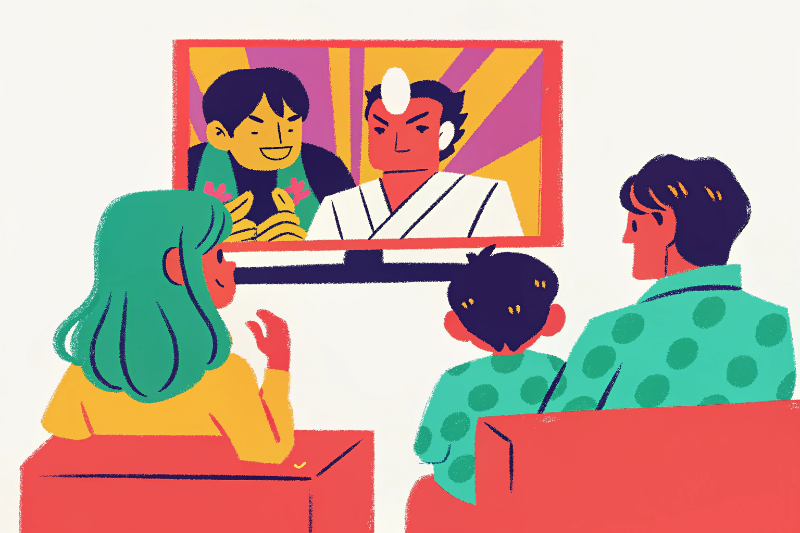
Anime’s multimodal nature is central to understanding its communicative power. Meaning is rarely conveyed through verbal language alone, instead, linguistic structures coexist with visual symbolism, acoustic design, and embodied gestures. Facial expressions, camera angles, color palettes, and background compositions play as significant a role in interpretation as syntactic patterns or vocabulary choices. This interplay of modes requires a type of reading that transcends traditional textual analysis, inviting the viewer to engage with the audiovisual landscape as an integrated field of communication.
In linguistic terms, anime provides access to a rich and varied spectrum of Japanese speech. Characters frequently shift between standard Japanese and dialectal forms, employ honorific expressions to establish social hierarchy, and adopt youthful slang that reflects contemporary language innovation. The pragmatic subtleties of Japanese – ellipsis, discourse particles, shifts in politeness – are rendered vividly in anime dialogue, offering learners authentic insights into the dynamics of spoken communication. Such linguistic features become even more meaningful when considered alongside visual and auditory cues, highlighting how prosody, rhythm, and gesture contribute to the overall pragmatic effect.
Culturally, anime serves as a symbolic archive of Japanese worldviews. Narrative motifs such as Shinto spirituality, mythological references, school life rituals, and seasonal aesthetics reveal the depth of cultural continuity embedded in contemporary media. At the same time, anime reflects Japan’s ongoing engagement with global culture, incorporating storytelling techniques, musical styles, and artistic conventions that transcend national boundaries. This hybridity illustrates how anime negotiates between tradition and modernity, between local heritage and international trends, creating a cultural text that is simultaneously Japanese and global.
Within the framework of digital linguistics, anime becomes part of a larger ecosystem of digital communication. Its circulation through streaming platforms and online communities enables new forms of audience participation, ranging from fan-produced subtitles to collaborative storytelling and multimodal fan art. These practices expand the life of the text beyond its original form, turning anime into a dynamic, co-created cultural artifact. Moreover, digital environments facilitate the global spread of Japanese words, expressions, and communicative styles, demonstrating how anime contributes to linguistic exchange and cultural adaptation.
The interpretive act itself changes in the digital environment. Viewers often encounter anime not as isolated texts but through interconnected networks of commentary, memes, reviews, and translations. This creates new layers of meaning that extend beyond the screen and invite collective forms of hermeneutic engagement. As such, anime becomes a multimedia discourse shaped by both its creators and its audiences, offering fertile ground for semiotic and linguistic analysis.
In conclusion, anime represents a significant subject for modern philological research because it embodies the principles of multimodal communication that define contemporary digital culture. It provides insight into authentic Japanese language use, reflects culturally significant symbols, and demonstrates how meaning is constructed through the interaction of various semiotic modes. For students of Japanese philology, engaging with anime is not merely a form of cultural appreciation but an academic endeavor that deepens understanding of language, media, and global communication in the digital age.
In addition to its value as a linguistic and cultural resource, anime serves as a critical lens through which scholars can examine the evolving relationship between technology, narrative, and human perception. As contemporary communication increasingly relies on multimodal forms – integrating text, image, sound, gesture, and digital interactivity – anime offers a rich corpus for studying how these elements coalesce into coherent communicative acts. Its narratives often experiment with temporal fragmentation, symbolic layering, and hybrid aesthetics, making anime not only an artistic product but also a laboratory for observing new modes of meaning-making.
Furthermore, the global circulation of anime highlights the transformative processes of translation, localization, and cultural adaptation. Subtitling practices, dubbing strategies, and fan-generated translations illustrate how linguistic meaning shifts across cultural boundaries, revealing the complex negotiations that occur between source and target audiences. These dynamics position anime as a fertile domain for exploring cross-cultural pragmatics, intercultural communication, and the sociolinguistic impact of media globalization.
The participatory cultures surrounding anime – online communities, fanfiction, digital art, and collaborative interpretations – also expand the hermeneutic horizon. They demonstrate that meaning in the digital age is increasingly co-constructed, fluid, and dialogic. For philologists, such environments challenge traditional notions of authorship, textual stability, and interpretive authority, encouraging new methodologies that account for distributed, collective forms of reading and writing.
Taken together, these factors affirm anime’s status as an indispensable object of inquiry for modern philology and digital linguistics. Its linguistic richness, cultural resonance, multimodal structure, and global reach exemplify the kinds of texts that define 21st-century communication. Engaging with anime thus equips emerging scholars with the analytical tools necessary to navigate contemporary media environments and to appreciate the deep interconnections between language, culture, and technology.
References
García, O., & Wei, L. (2014). Translanguaging: Language, bilingualism and education (pp. 1–160). Palgrave Macmillan.
Kress, G. (2010). Multimodality: A social semiotic approach to contemporary communication (pp. 1–208). Routledge.
Napier, S. (2005). Anime: From Akira to Howl’s Moving Castle (pp. 1–344). Palgrave Macmillan.
Steinberg, M. (2012). Anime’s media mix: Franchising toys and characters in Japan (pp. 1–248). University of California Press.
Ōtsuka, E. (2019). Theology of Narrative Consumption (pp. 1–224). University of Minnesota Press.
Azuma, H. 東浩紀. (2001). 動物化するポストモダン: オタクから見た日本社会 [The Animalizing Postmodern: Japanese Society Observed Through Otaku Culture] (pp. 1–222). 講談社 [Kodansha].
Itō, M. 伊藤剛. (2005). テヅカ・イズ・デッド: ひらかれたマンガ表現論へ [Tezuka Is Dead: Toward an Open Theory of Manga Expression] (pp. 1–318). ぶんか社.
Saitō, T. 斎藤環. (2011). キャラクター精神分析 [Character Psychoanalysis] (pp. 1–256). 筑摩書房.
Ōtsuka, E. 大塚英志. (2013). キャラクター小説の作り方 [How to Create Character-Based Narratives] (pp. 1–272). 講談社.
Nishihara, D. 西原達哉. (2015). アニメの詩学 [The Poetics of Anime] (pp. 1–298). みすず書房.
Morikawa, K. 森川嘉一郎. (2003). オタク: イズ・デッド? [Otaku: Is It Dead?] (pp. 1–210). 太田出版.
Published
Downloads
How to Cite
License
Copyright (c) 2025 Nigina ABDUGANIEVA

This work is licensed under a Creative Commons Attribution 4.0 International License.


 Republic of Uzbekistan, Tashkent city,
  +998 93 097 75 88